Motorized Shades for Oversized Sliding Glass Doors
Insider Tricks, Tips, and the Latest from the Window Treatment Industry in Southwest Florida
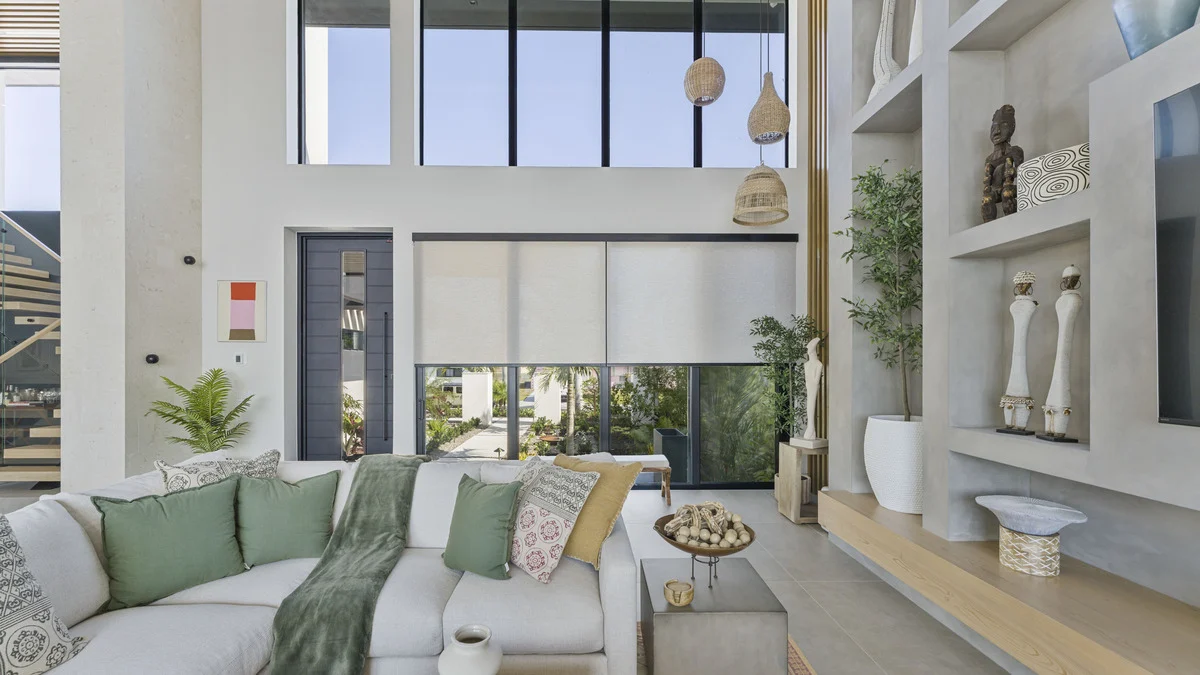
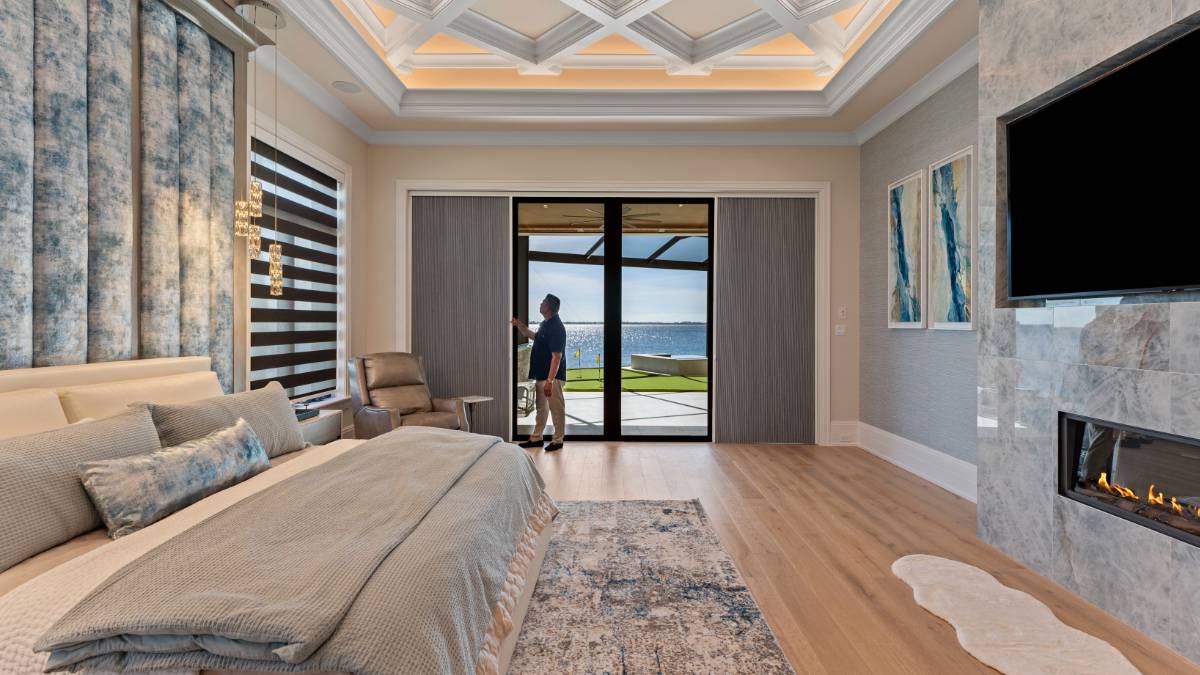
An oversized sliding door needs a treatment that respects the opening and the traffic through it. Motorization can help operate a suitable shade, but it does not remove limits on fabric, hardware, mounting or dimensions. Start with a measured assessment.
Map the opening and everyday passage
Identify moving and fixed door panels, handles, recesses, nearby furniture and the route used most often. Review where material rests when open and how that affects the view or doorway. Consider who operates the treatment and whether the control can be reached easily.
Compare one treatment with several sections only after feasibility is established. A larger motor does not prove the tube, fabric, brackets or supporting surface can carry the proposed span. Ask for the exact system’s limits and a clear section layout.
Choose fabric separately from control
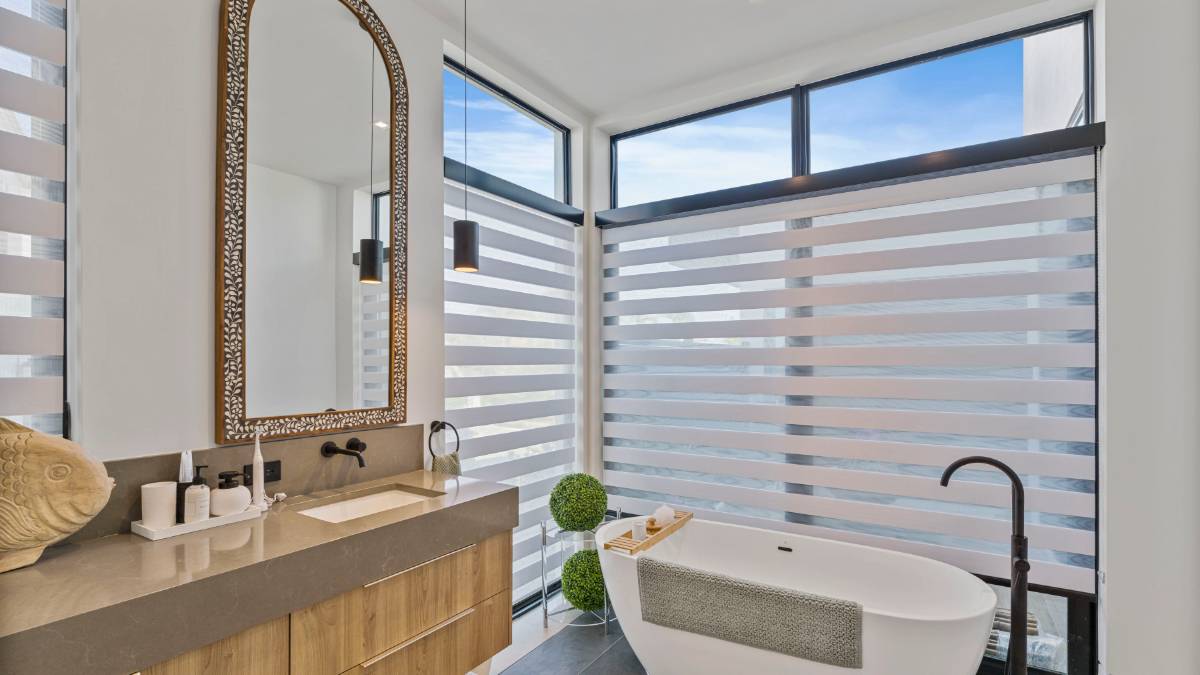
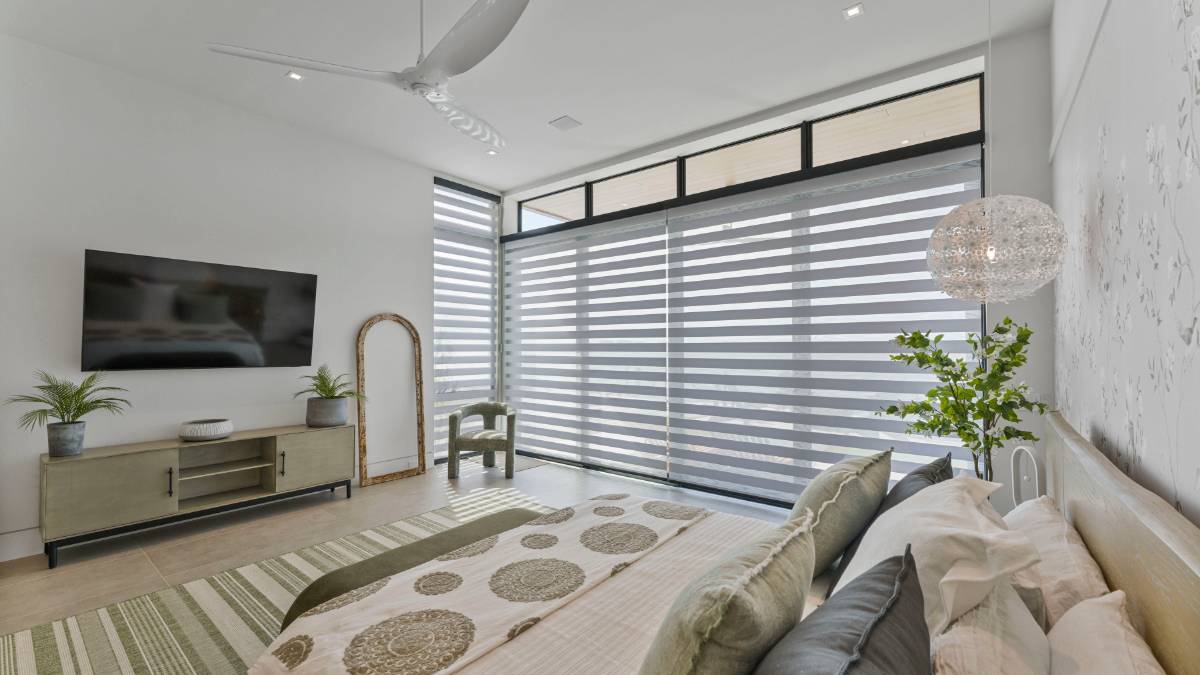
View-through fabric, privacy and bedroom darkness are different goals. Review samples in relevant lighting, including after dark. Discuss the sides, top and bottom where light may remain. Automation does not eliminate installation gaps.
If one opening serves several uses, explain which privacy and view priorities matter at different times. That helps the team evaluate useful divisions rather than selecting a layout solely from a photograph.
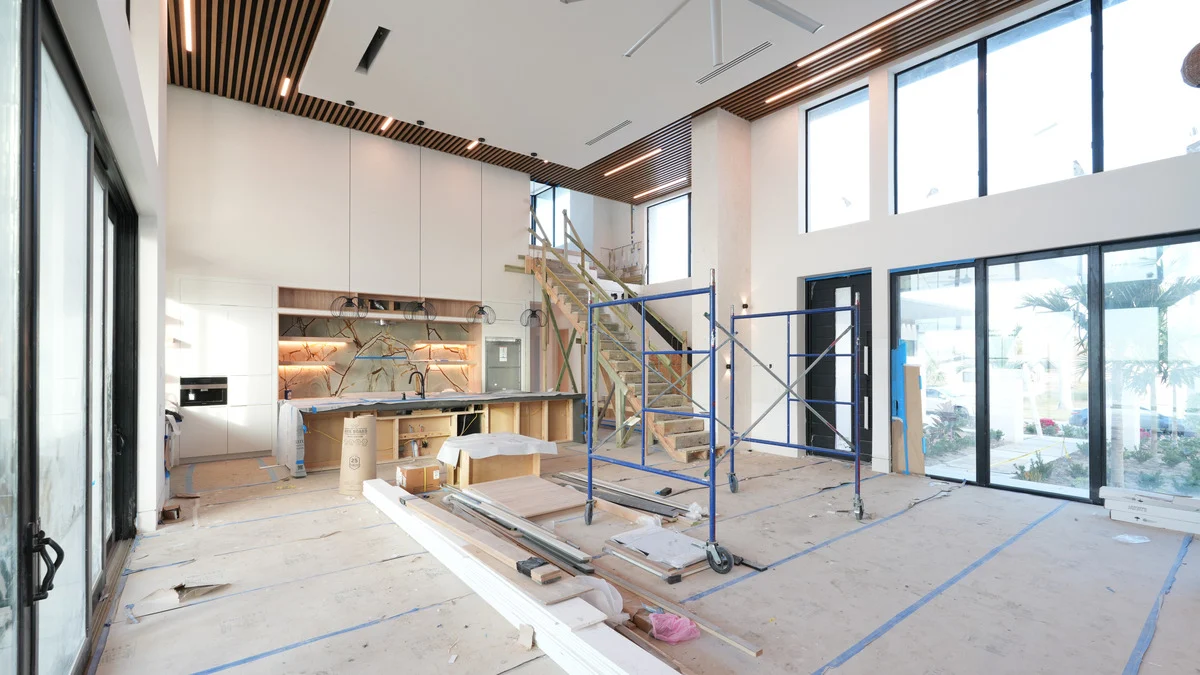
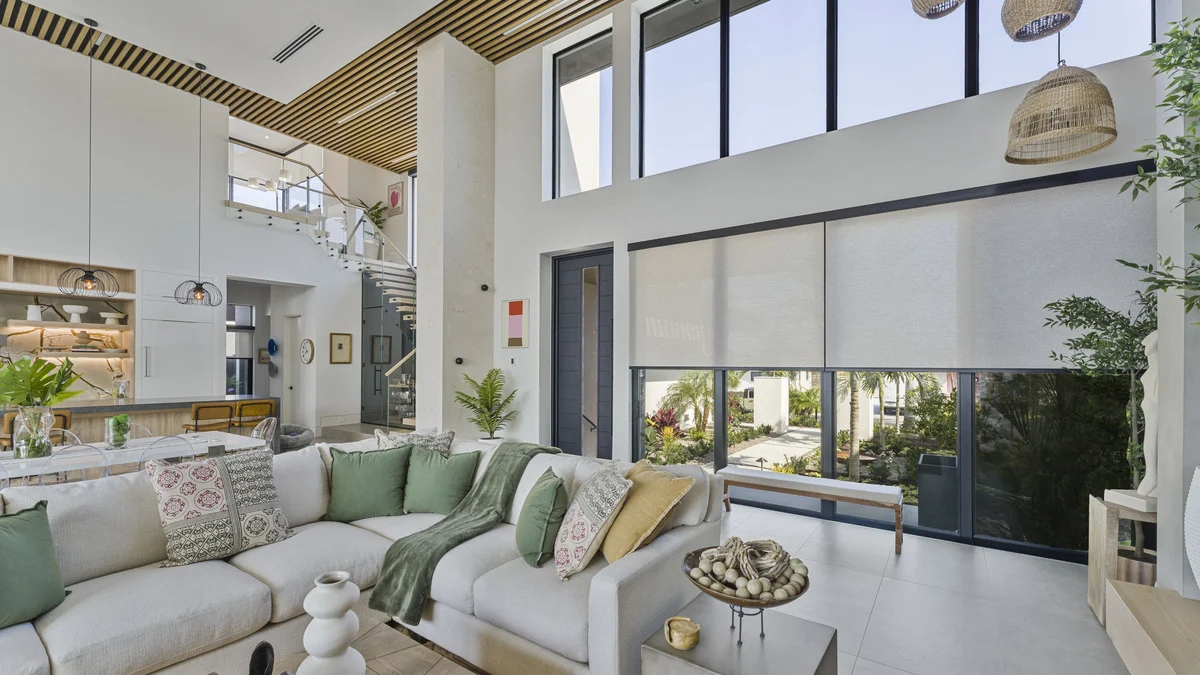
Before and After: Custom Shades for Great-Room Sliding Doors
Compare this EV Blinds project before installation and after the roller shades were fitted. The photographs help illustrate the importance of selecting coverage that complements the opening and preserves the room’s proportions. They do not, by themselves, demonstrate a specific motor or smart-home integration.
Questions to Ask Before Installing Motorized Shades
- How many shade sections will the opening require?
- Where will the fabric roll up when the shades are open?
- What power and controller options suit the chosen motors?
- Will multiple shades support grouped operation?
- How will service access and installation clearances be handled?
Specify grouped operation precisely
Several shades receiving a command together is different from identical travel speed or aligned stopping positions. Ask which functions are available with the proposed controls and how the arrangement will be demonstrated. Avoid calling the result synchronized unless that capability is documented and accepted.
Review power and service access at each unit. Identify how charging or maintenance can be completed safely at the installed height, and confirm who supplies any electrical preparation.
Consider manual and layered alternatives
EV Honeycomb sliders are manual-only. A Double Shade arrangement can combine a manual cellular slider with a separate motorized roller; only the roller is motorized. Compare the operating positions and space needed for both layers.
Explore sliding-glass-door options and the smart-blinds guide. For a measured review, contact EV Blinds with the property location and the way the doorway is used.