Direct answer
Motorized Blinds and Shades in Sanibel
When are motorized shades worth it in a Sanibel property?
Motorization is most useful when it makes a treatment easier and more likely to be used: on tall glass, broad doors, grouped windows, hard-to-reach openings, or rooms that need a repeatable glare or privacy routine. The shade, motor, power, controls, backup, and future service access should be planned as one system. Compare the complete Sanibel window treatment collection.
Local Buying Guidance for Motorized Blinds and Shades in Sanibel
Motorized shades are most valuable when they make tall, wide, grouped, or frequently adjusted treatments easier to use. The shade, motor torque, power source, controls, groups, scenes, connectivity, manual backup, and future service access must be planned as one system.
Sanibel rooms may face Gulf, bay, canal, or preserve light, with privacy, natural materials, rebuilt interiors, seasonal use, and nighttime light control requiring different choices from one elevation to another.
What EV Blinds Checks Before Recommending a Product
We verify shade size and weight, motor compatibility, outlet or low-voltage access, charging reach, radio conditions, grouping, wall-control location, app ownership, network expectations, and how a technician will service the motor later.
When to compare another option: A smart-home label does not guarantee compatibility with every platform, and battery power is not maintenance-free. Final integration depends on the selected motor, bridge, control ecosystem, site conditions, and current manufacturer documentation.
Ed’s Recommendation
“I start with dependable local control and daily routines, then add app or voice integration where it genuinely helps. A reliable remote and serviceable power plan matter more than a long feature list.” — Ed Torres
Frequently Asked Questions
Why Homeowners Choose EV Blinds
Call or text (239) 872-1913 or compare the complete Sanibel window treatment collection.
Ed’s recommendation
How Ed approaches motorized blinds Sanibel projects
“I recommend a motor when it removes a real daily obstacle. The Sanibel homeowner should still know how to operate the shade locally, reach the power point, and understand what happens if the network or app changes.”
— Ed Torres, owner of EV Blinds
Call (239) 872-1913 or book a free Sanibel consultation to compare the options in your home or condo.
Designed for Sanibel living
Dependable routines for seasonal homes and elevated glass
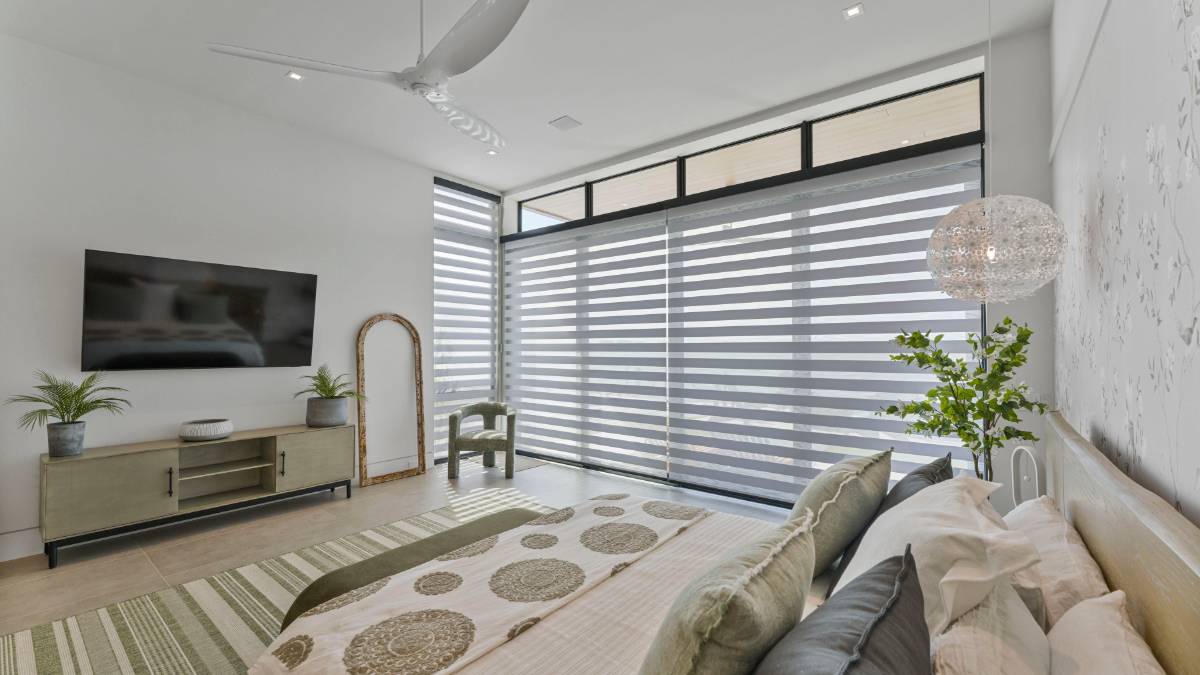
Elevated Sanibel homes can place clerestory windows, stair glass, and broad sliders well beyond comfortable manual reach. Grouped controls can manage several shades together while preserving separate control for the active door or preferred view.
Seasonal owners may value authorized app access, but guests, cleaners, and service providers still need a clear local control. EV Blinds documents remotes, wall controls, charging, power-loss behavior, account ownership, and the homeowner handoff.
Power planning should follow both the building and the shade. Rechargeable battery systems can be practical in finished rooms where new wiring is disruptive, while hardwired low-voltage power is often worth coordinating during a rebuild or major renovation.
Motor capacity is not selected from width alone. Fabric weight, shade height, tube size, bracket spacing, mounting structure, travel limits, sound expectations, and the number of daily cycles all affect the final specification.
Salt air and humidity make accessible, corrosion-conscious hardware and future service planning especially important on the island. The motor and controls should not be buried behind a fascia or ceiling detail that prevents inspection, charging, or replacement.
Smart-home integration is optional, not the definition of a useful motorized shade. A dependable handheld remote or wall control may be the better fit when the owner wants a simple daily routine without app accounts, cloud services, or voice platforms.
Large doors also need logical zoning. One motor across an opening can look clean, but multiple coordinated shades may better follow structural divisions, protect the active walkway, and keep a useful portion of the view open. The measured span and family traffic pattern—not a showroom assumption—should determine that choice.
At handoff, EV Blinds labels controls, tests every limit, demonstrates charging or power access, and confirms which person owns the primary app account. Clear documentation matters in a seasonal property because the next person using the room may not have watched the original installation.
A practical plan also anticipates storms and extended vacancies without calling an interior shade storm protection. Owners should know whether schedules continue locally, what happens after a power interruption, and how to leave each shade in a safe position before the property is unoccupied.
Where this treatment is a strong fit
- Tall, wide, or hard-to-reach windows and sliders
- Grouped rooms that need repeatable glare or privacy schedules
- Seasonal homes needing both local and authorized remote control
- Users who benefit from wall, remote, app, scene, or voice options
Tradeoffs to understand before ordering
- Compatibility must be confirmed for the exact motor, shade, hub, and platform
- Battery products require charging or replacement access
- Hardwired systems need early electrical planning
- Remote access depends on the selected network and service configuration
How the main alternatives compare
Manual cordless shades avoid batteries, wiring, and connectivity. A simple handheld remote can provide convenience without whole-home integration. Smart automation adds schedules and scenes, but it also adds setup and troubleshooting. The right level is the simplest one that solves the homeowner’s daily problem.
What EV Blinds checks during the consultation
- Confirm shade dimensions, fabric weight, motor capacity, speed, and sound expectations
- Choose battery, rechargeable, plug-in, or hardwired power with service access
- Map rooms, groups, scenes, schedules, wall controls, remotes, and users
- Document local override, power-loss behavior, app ownership, and handoff
The goal is not to install the same product on every opening. It is to select the treatment, material, control, mounting details, and stack that make each room easier to live with while protecting the view the owner values.
Related Sanibel guides
Straight answers
Frequently asked questions about motorized blinds Sanibel
Compare before you commit
See motorized blinds Sanibel options in your Sanibel property
EV Blinds will measure the opening, review sun and privacy, show appropriate materials and controls, and explain the limitations that matter before anything is ordered.
Prefer to talk first? Call (239) 872-1913. You can also return to the Sanibel window treatments hub.